A low-maintenance garden in Kerala is not a sparse garden. It is a garden where every decision has been made with rain, humidity, fast growth, leaf fall, fungal pressure, and strong sunlight in mind. Designs borrowed from dry cities often look excellent for three months and become a burden by the next monsoon. Gravel clogs with silt, imported ornamentals collapse in wet soil, lawns thin under shade, and elaborate edging disappears beneath growth.
The first question is not which plant looks attractive. It is how water moves through the site.
In Kollam, a garden may receive intense rain within a short period, followed by hot, humid weeks. Ground levels, roof-water discharge, soil compaction, and surface flow matter more than the style of the paving. A planting bed that holds water around the crown of a plant will eventually fail, even when the plant is technically suited to the region. A lawn laid over compacted clay will stay soft, patchy, and difficult to mow. Fertilizer will not correct poor drainage.
Good garden design services in Kollam should begin with a site reading, not a plant catalogue. The designer should study afternoon sun, walls that radiate heat, coastal exposure, wind, shaded corners, roof runoff, and utility discharge. These details decide whether the garden settles into a manageable rhythm or demands constant correction.
Low maintenance also depends on restraint. Too many small beds, narrow lawn strips, isolated shrubs, and decorative corners create work. Each edge needs trimming. Each pocket dries differently. Each ornament collects debris. Broad planting zones, accessible paths, and a limited material palette generally look calmer and are easier to maintain.
The visual interest should come from form, foliage, texture, and repetition rather than from a crowded mix of short-lived plants.
Build the Planting Around Structure, Not Seasonal Colour
The most reliable year-round gardens in Kerala are carried by foliage. Flowering has its place, but a garden designed around continuous bloom usually becomes labour-intensive. Plants need replacing, feeding, deadheading, pruning and pest control. Rain bruises flowers. Strong sun shortens their display. A week of neglect becomes obvious.
A stronger approach uses a structural layer first: compact trees, palms where space permits, evergreen shrubs, tough foliage plants and ground covers. Seasonal colour can sit inside that framework rather than carrying the whole design.
Plant selection should be based on mature size, not nursery appearance. A shrub that looks neat in a 25-centimetre pot may become two metres wide. Planting it half a metre from a wall guarantees repeated cutting. The same mistake appears with palms near roofs, heliconias beside narrow paths and fast-growing screening plants along compound walls. The garden does not become low maintenance because a gardener visits often. It becomes low maintenance because the plants are not constantly fighting the space.
Near entrances, avoid plants that drop sticky flowers, sharp seed pods or slippery fruit. In shaded courtyards, strong foliage plants often perform better than flowering species struggling for light. Along boundaries, dense shrubs can suppress weeds and soften hard walls, but they must have a manageable mature height.
Native plants deserve attention, though “native” is not a guarantee. Some local species sucker freely, spread aggressively or create heavy litter. Suitability is more useful than ideology.
A competent Landscaper in Kollam, Kerala, should be able to explain how each plant behaves after three years, not merely how it looks on installation day. Ask about pruning frequency, root habit, pest susceptibility, leaf fall and replacement risk. If the answer is vague, the plan is probably decorative rather than practical.
Grouping plants with similar water and light requirements reduces waste and failure. A drought-tolerant shrub beside a moisture-loving ground cover creates an irrigation compromise that suits neither. Repeating fewer species across larger areas gives the garden confidence and makes maintenance easier to read.
Mulch helps, but only when used properly. Organic mulch cools soil and suppresses weeds, yet thick mulch pushed against stems can encourage rot and termites. Fine mulch washes from slopes. Stone mulch lasts longer, but it heats in full sun and traps leaves. There is no universal choice. Exposure, planting density and cleaning method decide what works.
Use Materials That Age Well in Rain and Humidity
Kerala gardens are hard on materials. Constant moisture exposes weak joints, poor adhesives, low-density concrete and badly laid stone. A surface that looks polished at handover can become slippery, stained or uneven after one monsoon.
Material choice should be judged by how it weathers.
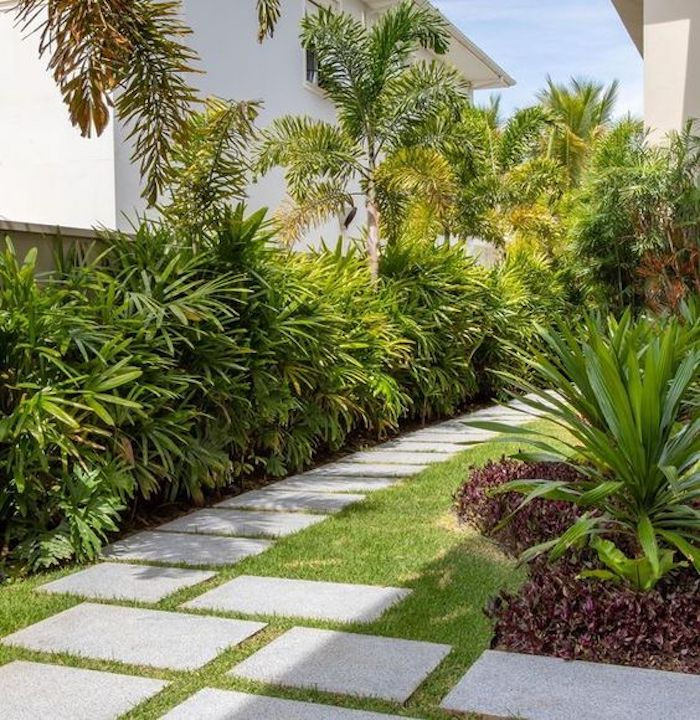
Natural stone landscaping is often selected for appearance, but its practical value is more interesting. Properly chosen and installed stone can handle rain, heat and daily use with less visible ageing than many manufactured finishes. Texture matters. Highly polished stone should not be used on exposed walkways. Porous stone may need sealing in stain-prone areas. Uneven pieces can suit informal paths but frustrate older residents, children and wheeled equipment.
The base matters more than the stone price. Settlement, weeds and loose edges usually begin below the surface. A thin sand bed over disturbed soil will not remain stable in a wet climate. Paths need a compacted sub-base, defined edges and a fall that allows water to leave without directing it towards the house or neighbouring property.
Decorative pebbles work well in narrow side yards, around stepping stones and where lawn will not grow. They reduce exposed soil and make drainage zones look intentional. They are not maintenance-free. Leaves collect between them, fine soil settles into the gaps and weeds eventually establish. Geotextile reduces the problem but does not eliminate it. Pebbles beneath large shedding trees usually become a cleaning nuisance.
Experienced Landscaping Services & Stone Products in Kollam, Kerala should treat supply and installation as one decision. A good stone laid badly performs badly. A modest material laid with correct gradients, stable edges and sensible joints can remain serviceable for years.
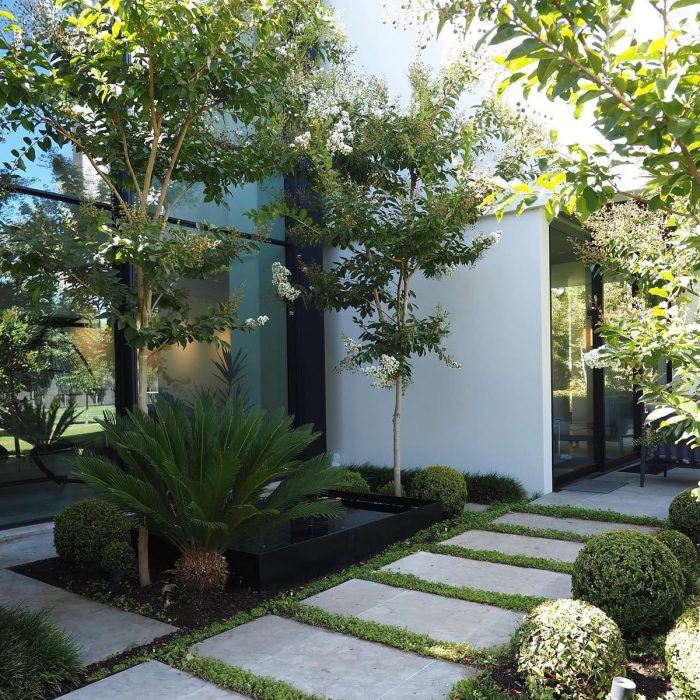
Keep the hardscape palette limited. Three paving types, two pebble colours, artificial turf and decorative brick in one small garden rarely create richness. They create visual noise and several maintenance methods.
Avoid inaccessible strips behind planters, narrow drains under hedges and corners where cleaning tools cannot reach. These details are often missed in drawings and become obvious only after leaves, algae and soil begin to collect.
Let Irrigation, Drainage and Access Do the Quiet Work
Smart landscaping is not about filling the garden with equipment. It is about removing repeated manual tasks without creating a new set of technical problems.
Drip irrigation suits shrub beds, hedges, kitchen gardens and planter zones. It delivers water close to roots and keeps foliage drier, useful where fungal pressure is high. Yet drip systems fail when water is dirty, pressure is inconsistent, emitters are buried under mulch or pipes are cut during maintenance. Filters need cleaning. Flush points need access. Zones need to match plant demand.
Automatic irrigation should not operate on the same schedule through the monsoon. A rain sensor or seasonal adjustment is more useful than an elaborate controller no one understands. Overwatering is common because residents assume automation removes the need for observation. Yellow leaves and root decline are then treated with fertiliser, which makes the problem worse.
Drainage must remain inspectable. Completely concealed systems suit architectural photographs, but blocked drains are easier to manage when access points are sensible. Leaf traps near roof outlets, gravel channels in selected areas and correctly placed catch basins can prevent waterlogging. Every drain needs somewhere legitimate to discharge.
Path widths affect maintenance. A route may look elegant on plan but be too narrow for a mower, wheelbarrow or ladder. Raised beds should be reachable without standing inside them. Hedges need clearance for pruning.
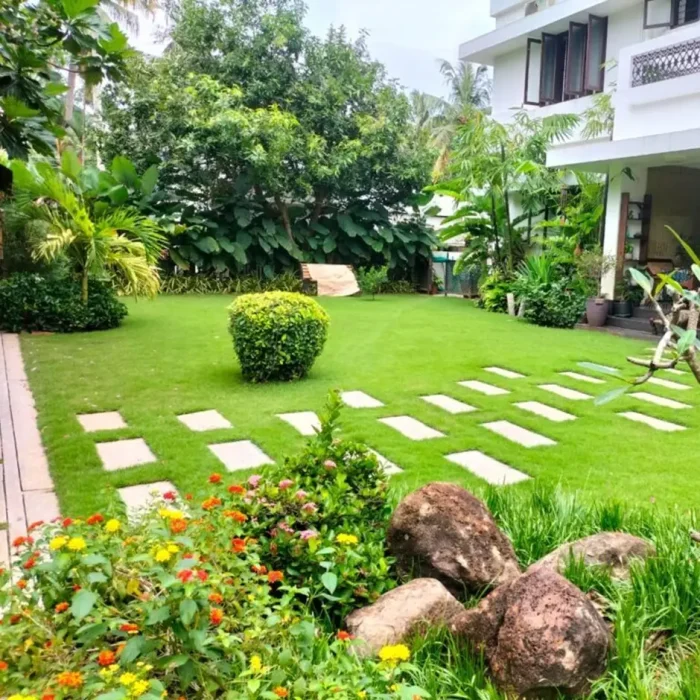
Lawn deserves a realistic discussion. In Kerala, a lawn can be beautiful, but it is rarely the lowest-maintenance ground treatment. It requires mowing, edging, feeding, aeration, weed control and sunlight. Small lawns with irregular curves are especially inefficient. In deep shade, use ground cover, stone, planted gravel or paving instead of repeatedly replacing turf.
Artificial grass removes mowing but adds heat, cleaning, drainage concerns and eventual replacement. In damp shade it can hold odour and encourage algae around the edges. It may work in a small, well-drained utility zone. It is not a universal substitute for living landscape.
Garden lighting should also be restrained. Well-positioned fittings improve safety and reveal strong planting forms. Too many low-level fixtures create wiring complexity, trap leaves and corrode quickly in humid coastal conditions.
Pay for Planning Before Paying for Corrections
Professional garden design is often judged by the plant list and visual presentation. The real value lies in coordination: levels, drainage, access, irrigation, lighting, root space, material joints, future growth and construction sequence.
A 3D design is useful because clients often struggle to read plans. It reveals scale, sightlines, wall heights and the relationship between planting and architecture. It can expose unrealistic expectations. A rendered palm may look elegant beside a window while the real plant would block light, damage the eaves or outgrow the space.
The image is not the project.
A good 3D proposal should be supported by dimensions, material specifications, planting schedules and technical details. Without those, it is only an attractive picture. Clients sometimes approve a visual and assume every plant, light and stone shown is included. The scope must state quantities, sizes, installation methods and exclusions.
Before starting, confirm how the property is used. Is there a dog? Are vehicles washed in the driveway? Do children play outside? Does an older parent need a level route? Will the family employ a gardener weekly or monthly? Is water reliable throughout summer? These questions alter the design more than style preferences.
Garden Design Services in Kollam are worth the investment when the process prevents expensive rework. Moving a drain after paving, replacing a failed retaining edge, removing an unsuitable tree or relaying a waterlogged lawn costs far more than resolving the issue during planning. Professional design does not guarantee zero maintenance. It should produce predictable maintenance.
Even a well-designed tropical garden grows quickly. It needs pruning, cleaning, nutrition and occasional replacement. The objective is to avoid weekly rescue work. A mature garden should become fuller without becoming chaotic.
Clients often reduce the budget by removing soil preparation, drainage layers or irrigation while retaining decorative stone and feature plants. That is usually the wrong compromise. Visible items can be added later. Underground corrections are disruptive and expensive.
Ask Garden Design Services in Kollam for a phased plan when the budget is limited. Complete the levels, drainage, primary paths, major planting and irrigation first. Add secondary planting, furniture, lighting or decorative features later. A coherent first phase is better than a finished-looking garden built on weak groundwork.